

One of the most common misconceptions I’ve heard about China, is that it is the antithesis of anything close to nature. I don’t blame them – almost every photo I see in the news of China is either of a concrete jungle, or a concrete jungle in construction. Couple that with the hoards of people and traffic in most urban cities, it really seems like the most undesirable of places to visit, let alone live.
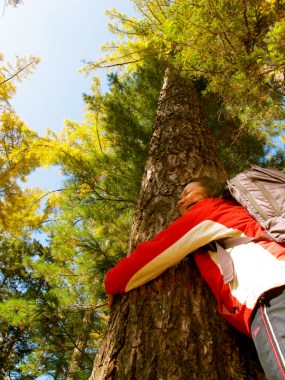
Yet, there is plenty of nature in China. I know for a fact because I have seen alot of it in my years of travel in the country. In fact, at last count 18% of China is covered by protected nature reserves. Compare that with 8.5% in the US; and 4.8% in Singapore. Of course, whenever we see such statistics, the first reaction is to to doubtful of the numbers, given that China is known to have pretty questionable figures. However, I’d like to give the country the benefit of the doubt that regardless of speed, reforestation is indeed happening.
One thing for sure, with regards to the environment, China has progressed in great strides over the last decade. Coming at the back of extreme pollution in its major cities in early 2010s, the government declared war on pollution at every level. And it is winning – from implementing top-down strict policy measures to transitioning millions of coal-workers to clean energy jobs, many major cities in China have managed to overturn their dependence on cheap fossil fuels, to natural gas and renewable energy.
Whilst promising news of China’s increasingly blue sky days brings cheer to many, there is still much to be done to preserve China’s natural beauty. And I am sure I’m not alone in this. A fantastic podcast I listened to recently with the Nature Conservancy’s Managing Director and the organization’s work in China with both government and businesses reaffirmed my belief. Not only is the Chinese government increasingly focused on protecting China’s natural environment, the people themselves – 老百姓 or the common folk – understand firstly that climate change is real, and secondly, that all our actions play a part in protecting our environment. After all, nature has been a quintessential part of Chinese art and culture. (Those who read Chinese would certainly agree at how flowery it can be!) and I believe it is only a matter of time before the growing middle class prioritize this previous commodity as a given right.
Preserving what’s left
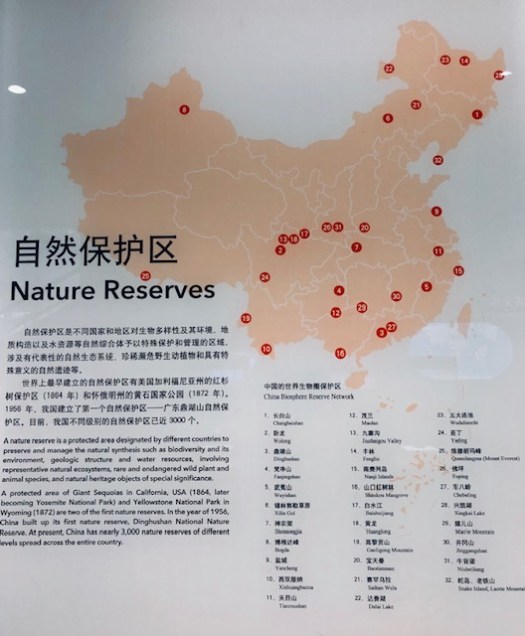
A recent visit to Shanghai’s Natural History Museum gave me a good sense about what’s to come in China. China’s strides in preserving its nature reserves spans not only in small pockets, but across a network of biospheres – large ecosystems dedicated to learning through the integration of nature conservation, sustainable development and logistical support. According to this panel shown above, there are a total of 32 biospheres in China now, possibly more to come.
Elsewhere, reforestation projects are abound across China as the country comes to grips with the effects of climate change. From sandstorms, flooding and pollution issues, China certainly has its fair share of natural catastrophes. In 2015, China reported to have increased its tree cover by 32%. However, it was found that most reforestation efforts simply planted one tree species, resulting in a monoculture plantation, some possibly not even be native to the area. This is not uncommon – I have seen such careless practices even in Europe in my travels, and it is quite disheartening. We know the work is not over.
There is really much more to write about nature in China, and I can’t wait to keep going. However, I’m going to leave with fantastic images of the country I can’t wait to visit (or re-visit) with my children, in time to come.
(Images below were taken by me over the years of travel in China, between 2005 to 2019.)


 Little Roots in China