
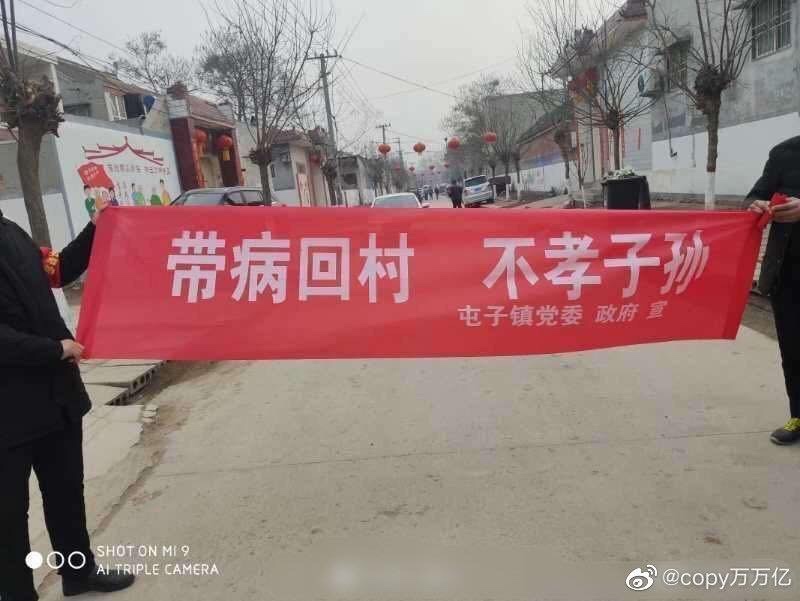

Coronavirus and AQI pollution at 290. Happy birthday to me. From the apocalypse.
Many people have reached out to ask how things are in Beijing. Just to say us and the grandparents are doing well; and – surprisingly – enjoying an enormous deal of indoor time. With two young kids it always makes for a lot of entertainment!
I thought I’d put out some of my own views about the way this crisis is handled, from my own perspective being in China, in relation to what’s to come.
Firstly, it isn’t only Wuhan. The entire country went on lockdown mode within days of the spread.
Just to give some perspective on how quickly the situation has evolved:
Today is the 29 January. Just two weeks before, I was still in Singapore having drinks with a friend who asked about the virus and warned me to be careful. I practically laughed it off as a non-issue, as Beijing is so far north and the virus seemed very concentrated in one area. Besides, the chances of animal-human transmissions are so low (that was what was believed at that time).
A week later, my parents arrived into Beijing from Singapore. We hear of the outbreak spreading, and that it was determined that Coronavirus is actually spreading via human-human transmission. We research about the risks and agree to take extra precaution, especially with two very young boys in tow. Our travel plans still in place, and everyone excited about passing into the Year of the Rat.
Within a matter of 3 days, everything changed.
From two cities in Hubei province locked down, to 20 cities, and more to come. As quickly as the virus numbers rising, the internet blows up with news of the hospitals being inundated with thousands of patients. The epicentre, Wuhan, transformed into a war zone. Frightening scenes of military medics dressed in Ebola-style protective gear locking down residents at intercity gantries.
The most significant news to me however, was that coming out of the central government. What is usually China’s sources giving positive spins and lofty statements about issues being resolved, were suddenly very swift and resolute messages issued right from the top: The problem is grave, the outbreak is spreading fast, more outbreaks expected. Almost immediately, Beijing, Shanghai and several major cities were put into Level 1 of emergencies (the highest level). That, I felt, was unusual.
I didn’t even know about Beijing being brought into Level I, until I came home on New Year’s Eve at 4pm into my condo, and the guard stops me, takes my details and enquires if my apartment is occupied during this period. I look at the checklist on his clipboard, his little handwritten “无人在家“ (No person at home) on almost every apartment in the block. That’s how empty Beijing is at the moment.
He changes the status on my apartment to “6人在家” (“Six people at home”).
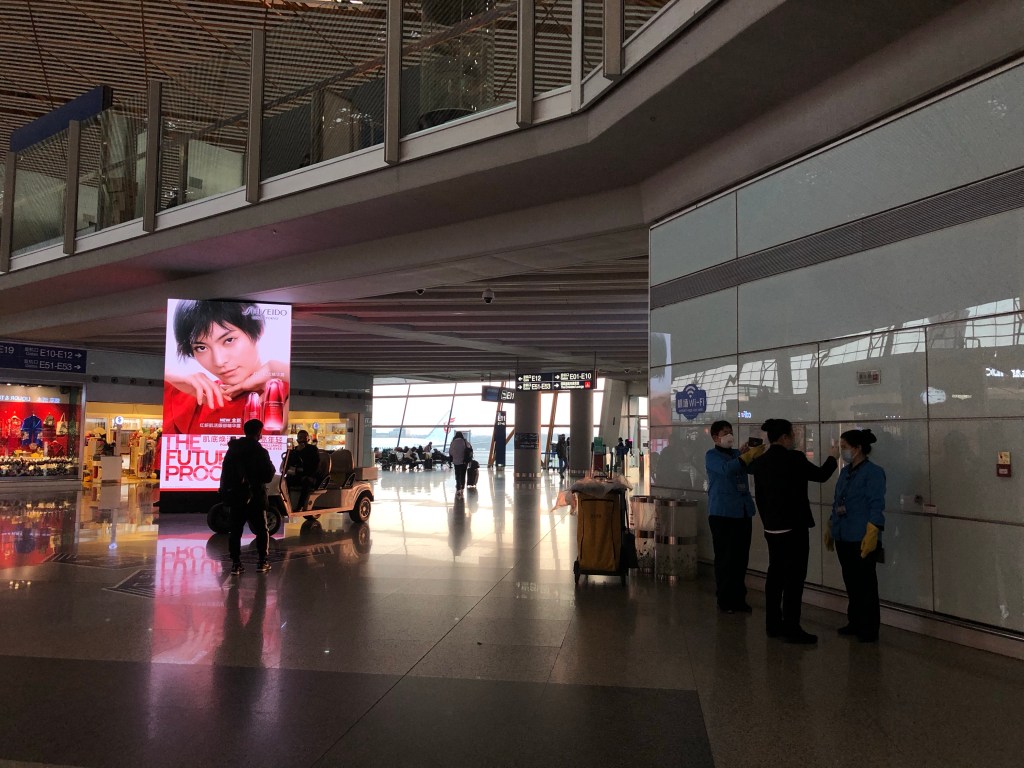
Signs plastered all over by 27 January (Day 2 of Chinese New Year) – from apartment blocks to shops and Wechat accounts over the days that pass – from the “7 Steps to Handwashing”, to plastic protection on lift buttons, cleaned every two hours. All documentation photographed, recorded and submitted to the authorities. Overnight, Beijing city becomes a ghost town.
The timing of the outbreak couldn’t be worse
Every year record numbers are on the move. This year, Chinese citizens are scheduled to rack up 3 billion trips over Chinese New Year alone.
It is a sight to behold if you witness this first hand – the train stations flooded with people rushing home to their provinces across the country to be with family to celebrate the most important time of the year.
The growing middle class of China meanwhile, have greater spending power and find novel ways to enjoy family time. As such, regional countries -Singapore, Thailand, Australia, and even long-haul destinations in Europe and the US welcome the influx of holiday makers.
Until this year.
Within a matter of days, the internet surges with keyboard warriors pissed off that Chinese mainlanders have entered their shores, and spread the virus far and wide. The fear of contagion is understandable of course, but it’s the racism I cannot take. From the lack of sensitivities in Western countries type-casting every Chinese-looking person to assuming all Chinese now getting its retribution for what I considered to be the only thing the mainstream media portrays of China in the past year – Uighur or HK Democracy situation. It is vile, pathetic and just shows the worst side of us humans.
Sadly though, the numbers in a matter of days begin to climb. Death toll is rising, and much uncertainty as the China’s travellers are stuck in transit all over the world. We meanwhile discover that the virus is transmissible during the incubation period.
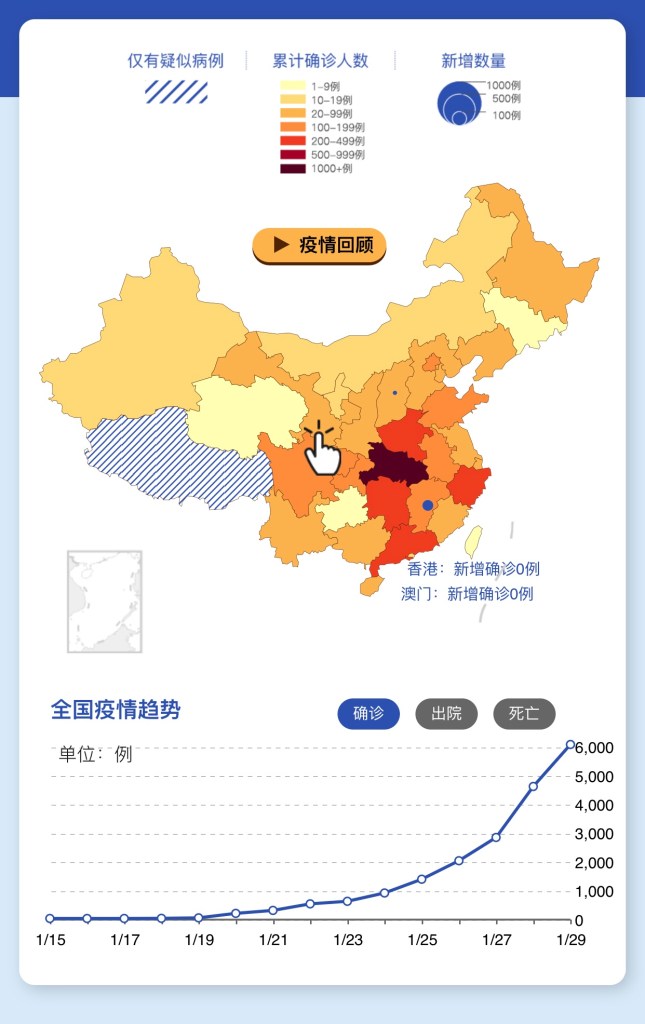
What is to come
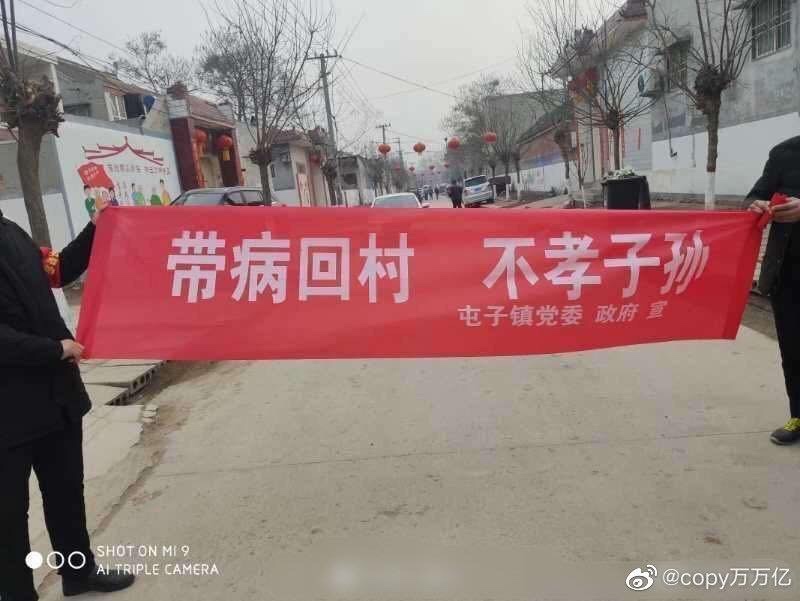
China is pulling out all the stops this time to curb the spread. From the swift actions taken to isolate the region with the highest number of cases, to lockdowns of provinces across the country. Its government is even going as far as to track down a single PRC woman in Lyon who tried to hide her flu-like symptoms from the French immigration. No doubt when China wants something done, mobilizing its hundreds of millions of citizens suddenly seems like the CCP’s strongest forte.
Of course, the devil is in the details. Many have already taken to the internet to lambast the Mayor of Wuhan for his slowness to act, and hospitals for not responding to needs of the thousands flooding into hospitals with suspect virus.
Before we pass our judgements on the issue, let’s think how your country would manage such a virus outbreak? Multiply that complication by the 58 million population in a single province of Hubei, and then over 130 million travellers expected to be on the move over Chinese New Year. Any policy change or directive has ripple effects that extend to hundreds of millions.
The one thing the country has though, is labour. Where else can you otherwise build not one, but two makeshift hospitals, collectively capable of treating over 2,000 patients far from the city within 6 days?
Can we overcome the virus?
The SARS episode is the biggest reference point for most of us. In retrospect, the virus that infected 8,098 people resulted in a total of 774 deaths. That’s less than a 10% death rate over a span of 8 months.
Ebola, the Avian Flu H7N9, MERS were in fact strains of viruses that erupted but disappeared as mysteriously as they appeared.
The current death rate for the novel virus is at 2%. 1% have recovered.
Meanwhile, China’s scientists have identified the genetic sequence of the current novel coronavirus within days and released the code publicly online. This has allowed scientists to start vaccine development work without needing a sample of the virus. In contrast, during SARS, it took U.S. scientists 20 months to go from genetic sequence to the first phase of human trials. By that time, the outbreak was under control.
Couple that with China’s draconian measured to stop the outbreak at all costs internally, I am confident that there is some light to the end of the tunnel.
That said, a lot of regional cooperation is needed to quickly curb the spread. Five million people from Wuhan left the city before the Chinese New Year. If the outbreak happened anytime before or after the lead-up to the holiday period, things would’ve been very very different.
Sure leaves many to wonder about the conspiracy theories about biogerm warfare. Perhaps we’ll never know…
 Little Roots in China